
Industry Pro: Film Producer Bonnie Arnold
 You hear a lot about “sharks” in the entertainment industry and the rude or ruthless things people have done on their way to “making it.” But though those people exist, more industry success stories involve people who are personable and extremely hard working, like today’s profile subject, and who also know what they want and go after it strategically. In other words, you don’t become an award winning feature film producer by remaining silent and waiting to luck into the opportunity. Though I did luck into the opportunity to talk to Bonnie Arnold about her path to Hollywood and beyond.
Current position (or recently-completed project or projects): I am a producer at DreamWorks Animation currently working on How to Train your Dragon 2 and 3.
Hometown: Atlanta, Georgia.
Early interest and involvement in entertainment? As a kid, I loved going to the movies with my mother. Afterwards, I would always have to buy one of the fan magazines they had at the time, like “Photoplay.” I grew up in Atlanta before film schools were everywhere, and I didn’t exactly know how to pursue a career in the movies.
College and degree: I graduated high school in the Watergate era, which spurred my interest in Journalism. I got a degree from the University of Georgia. Though it was a good program, it was very academic. I felt like I needed something more practical so I decided to go to Boston University’s graduate program which offered more hands-on experience.
Did you have an internship while you were in school? In graduate school, I had an internship at WGBH, Boston’s public television station. I worked on an NPR documentary about popular culture in America. I started to learn more about production and I liked it.
Are you interested in working in the entertainment industry? Check out “Breaking Into the Biz: The Insider’s Guide to Launching an Entertainment Industry Career” for step-by-step guidance on identifying, pursuing, and landing the right first job on the path to your chosen entertainment goal.
How did you get your first job? When I finished my program at BU, I came back to Atlanta and applied for a ten-week internship at the Georgia public television network with a filmmaker who was producing two films for the first season of a drama series for PBS called “American Playhouse.” The internship worked out so well that the producer hired me to be his full time assistant. The film was shot in New Hampshire and it was my first experience on a movie production. I knew from the first day I walked onto the set that this was what I wanted to do.
Can you tell me a little about your journey? It started in Atlanta which had a small but thriving film community. I worked on films, television, commercials, and industrials as a production coordinator, location manager, assistant director. I learned so much about filmmaking, what to do and what not to do, how to hire the best crafts people, run the set, manage the budget and tell good stories. During that period I worked on two big Hollywood productions, The Slugger’s Wife and The Mosquito Coast, both of which reinforced my convictions to go to Hollywood and make feature films.
How did you get to Hollywood? While working on a film in Atlanta with independent producer, David Picker, he was asked to become president of Columbia Pictures. David invited me to come to Hollywood and work for him at the studio.
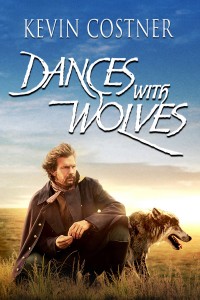 How did you get your first producer credit? I was offered a Producer Assistant job at Columbia Pictures on a movie called Revenge. Kevin Costner was one of the producers and the lead actor on the film. Kevin and his partner Jim Wilson told me about another project they were trying to raise money for that Kevin wanted to direct. When it looked like they had the financing together, they said, “We need somebody like you to come help us run the production.” I said, “Can I be a producer?” They said, “Okay.” Next thing I know I’m in South Dakota as the Associate Producer on Dances with Wolves and trying to figure out how we were going to do it all with very little money. That really became a defining project of my career. At one point, we didn’t know if it was going to be really great or not. But, fortunately, it turned out to be a pretty amazing experience and Academy Award winner for Best Picture!
You can’t do better than Academy Award for Best Picture. It was really a highlight in my professional life. And it opened so many doors for me professionally.
How did you make the transition from Live Action to Animation? Quite out of the blue, I heard from a friend who wanted me to meet a friend of hers at Disney. They were looking for line producers for some smaller projects and I agreed to meet with them. One of the executives I met with happened to mention that the Feature Animation division was looking for producers on some of their upcoming projects. She suggested that I meet with Peter Schneider who was running the animation studio.
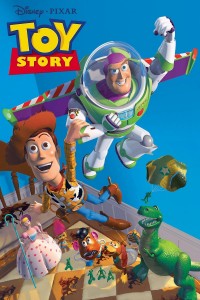 Peter and I hit it off immediately and he said they had two openings: one was with a traditionally animated film that became The Lion King, the other, was a small film they were making with a computer animation studio, Pixar, in the San Francisco area. I told Peter that I was looking for a producing job and did not know anything about animation. He said that was ok, because we (Disney) know animation, and you know how to make movies on a small budget. He asked me to meet the director of the second film, John Lasseter. John and I spent two hours talking about his project, Toy Story. He offered me the job.
The Pixar team was so small and so collaborative and it was my first opportunity to be involved in the creative process. I began to realize how much I had learned about storytelling and how to work with the director in order to help him or her to get their story on the screen for the money.
That’s wonderful. Now you produced a live action movie a few years ago, right? Yes. I optioned a novel about the last year in the life of Leo Tolstoy called The Last Station. I developed and produced that film with two partners in Europe. It was released in 2009 and starred Christopher Plummer and Helen Mirren. They were both nominated for Oscars for their performances. Although it was an unbelievable amount of work, it was an amazing and rewarding experience. It took me back to my roots in live action film making with a story I loved and passionately believed would make a great film.
What do you consider your big break? There were three turning points. One was Producer David Picker inviting me to come to Hollywood and work for him at Columbia Pictures. The second was Dances with Wolves, not only was it a great work experience, but the success of it put me on the map in a different way. And finally producing Toy Story allowed me to cross the bridge between line producing and creative producing.
What is the best career advice you ever got? “Don’t do your old job.” It’s what a producer who I was working for told me when I left him to take my first producing job on Dances with Wolves.
Oh, that’s great. I’m looking for a eureka moment when you realized that you did or did not want to do something or that you should do something differently. Once I interviewed to be an assistant to a producer on a movie called Red Dragon. They offered me the job but wanted me to learn shorthand. I said no because it felt like a step backwards. It motivated me to try harder to hold out for the next step up in my career.
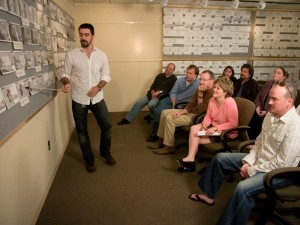 Describe a typical workday in your current position. What I like about my job is no day is ever the same. There are days when I come in and there are 5 or 10 crises that I have to resolve. It keeps me on my toes. Some days I’m traveling and some days I’m meeting and talking about budgets and some days I’m watching the results of what the artists have done. That can be exciting.
What is the most challenging part of your job? The biggest challenge of my job is juggling wearing the producer hat, working to help the director get his vision on the screen, and then balancing that with working for DreamWorks Animation and looking out for the best interest of the studio financially and creatively. Sometimes those tasks conflict but my job is making sure we are all making the same movie.
Okay. Now I’m looking for your worst job or worst day in the entertainment industry. I was working for the first time as the Location Manager on a small independent film. We were filming in the middle of nowhere. Part of my job was to go out and map the locations. We had a small amount of equipment and a giant 18-wheel truck. I found a great way to get to the location and I was so proud of myself. The next morning, when I was leading the whole company down this dirt road, all of a sudden I came to this bridge, over this creek. I realized that the big 18-wheel truck could not go over this bridge; it was way too heavy. There was no way out other than to back up. I felt like crying, but lucky for me the head driver was a professional teamster. He could drive anything anywhere. So he just pats me on the back and says, “Honey, don’t worry. I’m going to back this thing up.” It was about five miles up the road. I said, “You can do that?” He said, “I can back this thing up a snake’s ass if I have to.” We had a good laugh over it in the end. That was a bad day that turned out okay.
Conversely, your best day in the entertainment industry? One of my best days was February 13, 1991. I woke up at 5:00 in the morning to hear the Academy Award nominations being announced. Dances with Wolves was nominated in almost all of the major categories. People started calling me right after. Toy Story got all kinds of recognition and How to Train Your Dragon was nominated for best animated film, but the first time it happens, it is so exciting and unbelievable.
So what’s the best thing about your job? I love what I do. I love it every day. I love the artists that I work with. I love the end result. I am thrilled that I actually get paid to do this. I’ve been doing it for a long time now. I’m not tired of it one bit. I relish it every day.
What’s the worst thing about your job? I guess the worst thing is sometimes having to deliver bad news. It can be related to anything from the budget to the creative direction and then to someone’s performance. It’s always difficult telling someone something they don’t want to hear.
I’ve got a couple more questions. I’m looking for a brush with greatness. It can be a celebrity encounter or just being exposed to someone being brilliant at what they do. I’ve been very fortunate to work with some people that are so talented. But one of my favorite moments just in terms of meeting people was when I had the opportunity to meet Olivia de Havilland. One of my favorite movies as a kid, especially being an Atlanta girl, was Gone with the Wind. I got to say hello to “Melanie Wilkes” and shake her hand. Growing up, I never thought in a million years that I would be in a place where I would meet her.
That’s a full circle moment. If you would have taken a picture of me at that moment, my mouth was probably wide open. I was star struck and humbled at the same time.
What do you think is the secret of your success and/or what advice would you give to somebody coming behind you? It’s about hard work. I have really worked hard, sometimes to the detriment of other things in my life. That and taking advantage of every opportunity.
The other thing is that you have to play your own course. You can’t constantly compare yourself to other people’s achievements. It’s one thing to think, “Oh, I wish I had that person’s career”, but you can’t worry about it. You have to figure out what your course is going to be and stick to it. I did the job that people hired me for and did a good job at it, and people recognized that about me.
Last question: Where do you go from here? I feel like I’m in a good place. How To Train Your Dragon 2 is set for June 13, 2014 and after that How To Train Your Dragon 3 for June 2016. After that, who knows what might be. I have been doing some lectures at UCLA and USC. Maybe teaching is in my future. Above all, I love watching movies and making movies. Sometimes you just have to wait and see what’s going to present itself next.
If you liked this post, subscribe to Your Industry Insider to get weekly emails about new content, free webinars, and special offers. Become a Your Industry Insider INSIDER today!
ENTER YOUR EMAIL ADDRESS HERE & PRESS SUBMIT


Comments

About JennyYM
Jenny Yerrick Martin is a veteran entertainment hiring executive with 20+ years in film, television, and music. She created yourindustryinsider.com to give students, recent grads and others a true picture of the layout of the industry, and how to break in, transition to a new area, or achieve more success on their current path.


